When can asphalt work actually be done in the Colorado high country?
Roughly late spring through early fall, and the usable part of that is shorter than the calendar suggests. Asphalt needs warm, dry ground to bond and cure. At six and seven thousand feet, with cold nights well into June and again by September, the genuinely reliable window is narrower than what you will read on national sites written for the Midwest.
What the material actually needs
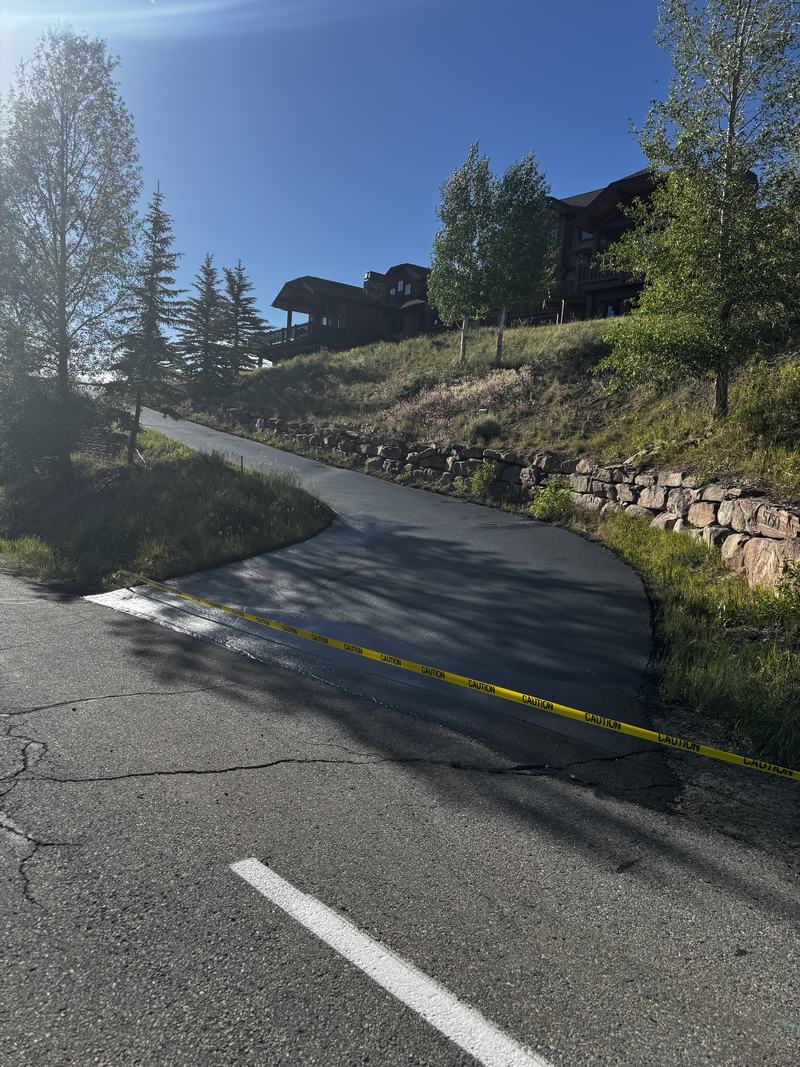
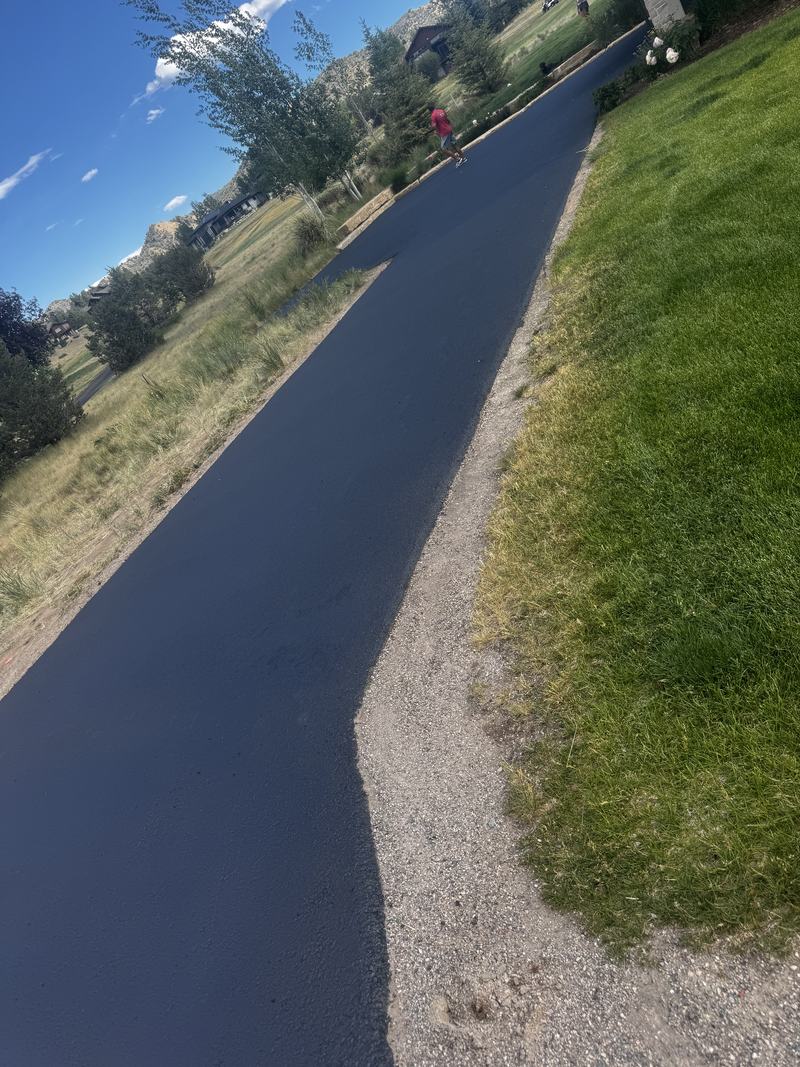
Sealcoating is the fussiest. It needs a stretch of dry days with temperatures above roughly fifty degrees and no rain in the forecast for a day or so afterward, because it cures by evaporation rather than by chemical set. A cold night too soon after application can ruin a coat that looked fine when we left.
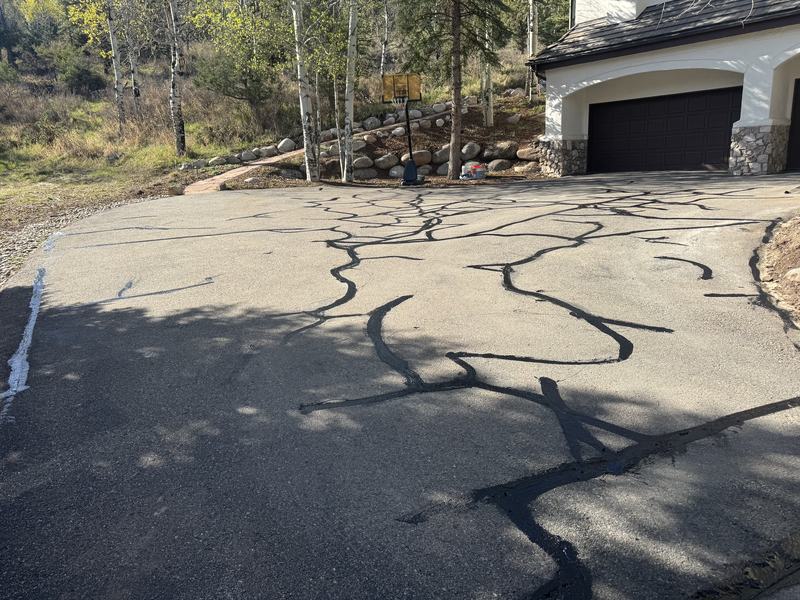
Crack filling is more forgiving on temperature but not on moisture. The crack has to be dry and clean or the material will not bond to the walls of the crack, and unbonded filler pops out by spring.
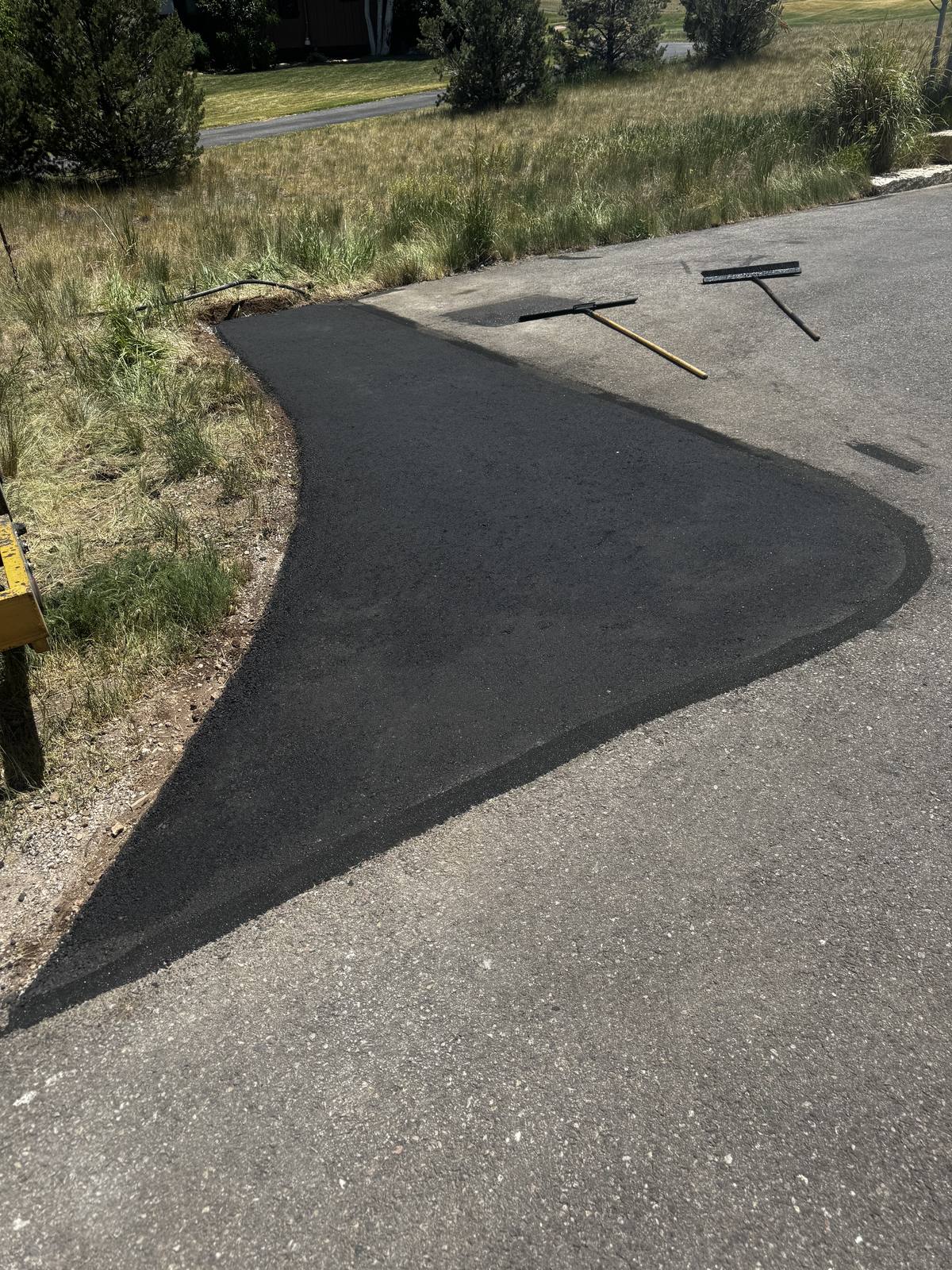
Hot mix paving for patching and resurfacing needs the ground itself to be warm, not just the air. Early in the season the air can hit seventy while the ground is still cold from winter, and asphalt laid on cold ground does not compact properly.
Why the good weeks fill up
Every asphalt contractor in the valley is working the same short window, and everyone who noticed their driveway over the winter calls in the same two weeks of spring. The result is that the middle of the season books out and the work that gets squeezed into the shoulder weeks is the work most likely to get weather.
If you saw cracks last winter, the move is to get on a schedule early rather than wait for the driveway to look bad enough to feel urgent. Early scheduling is not a sales line here, it is the practical difference between getting the job done in good conditions and getting it done in a rush before the weather closes.
What to do in the off season
Nothing expensive. Keep the driveway clear of standing water where you can, because water sitting in a crack all winter is what does the damage. If a crack opens up in January there is no good way to seal it properly until things dry out, so photograph it, note where it is, and get it on the list for spring.
It is also the right time to get a look and a number, so the work is scheduled rather than scrambled.
Quick answers
What temperature does it need to be to sealcoat a driveway?
Above roughly fifty degrees, with dry weather holding for about a day afterward. Sealer cures by evaporation, so a cold night or rain too soon after application can ruin the coat even if it looked fine when it went down. At our elevation that rules out much of the shoulder season.
When is the asphalt season in the Colorado mountains?
Roughly late spring through early fall, and the reliably usable part is shorter than the calendar suggests. Cold nights persist into June and return by September, and the ground has to be warm, not just the air. The most dependable stretch is the middle of summer.
Can you fill driveway cracks in the winter?
Not properly. Crack filler has to bond to clean, dry crack walls, and in winter the crack is holding moisture. Material forced in anyway will not bond and generally pops out by spring. Photograph the crack, note the location, and get it scheduled for the first dry stretch.
How far ahead should I schedule driveway work?
As early in the season as you can. Everyone in the valley is working the same short window and everyone who noticed a problem over the winter calls in the same two weeks of spring. Booking early is the difference between the job being done in good conditions and being squeezed in before the weather closes.
Does snow damage an asphalt driveway?
Snow itself does not, but what comes with it does. Meltwater seeping into cracks and freezing overnight is the main mechanism that turns a small crack into base failure, and plow blades catch on raised edges and patches. Sealing cracks before winter is the single most effective thing you can do.